
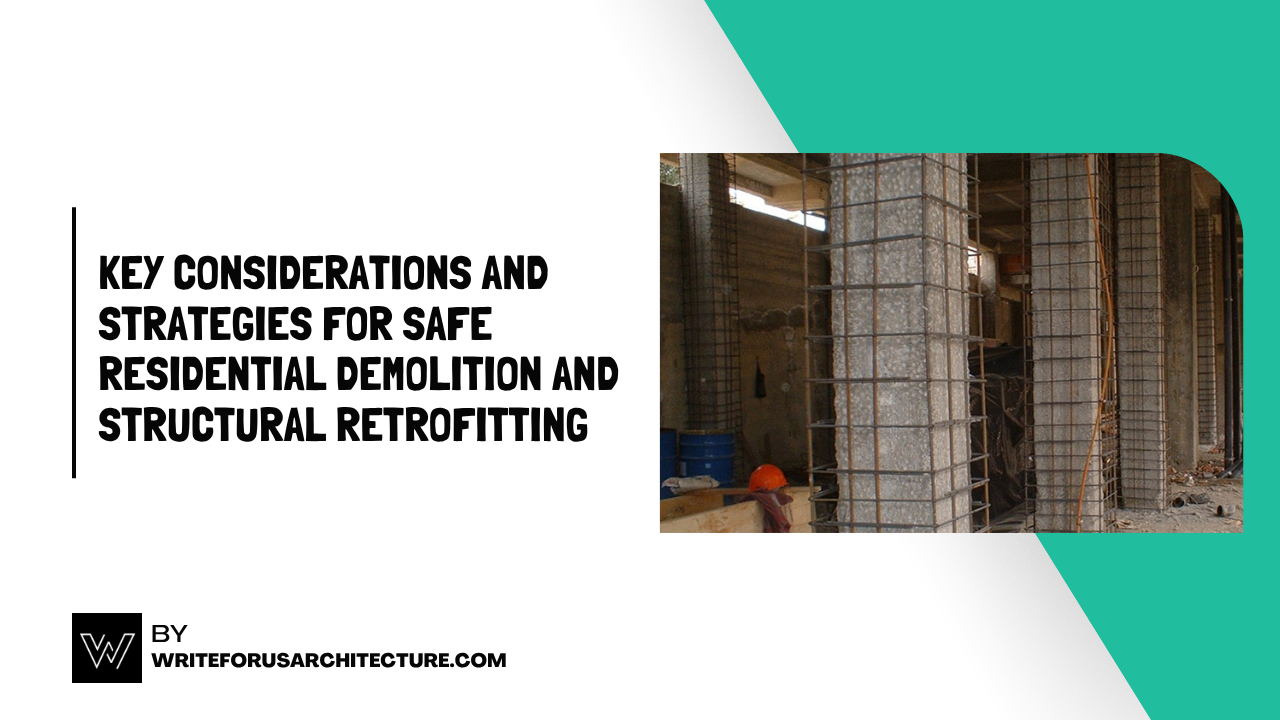
Major residential renovations, structural reconfigurations, and complete property teardowns represent major capital investments for homeowners, real estate developers, and general contractors. Whether converting a legacy single-family dwelling into a modern layout, removing an outdated concrete foundation, or clearing a lot for custom ground-up construction, executing structural teardowns requires far more than brute force. Modern residential site work demands precise engineering, strict safety compliance, environmental controls, and a thorough understanding of structural mechanics. Unlike remote industrial sites, residential demolition occurs in close proximity to neighboring homes, active utility lines, and public infrastructure, making risk management, noise mitigation, and dust containment paramount.
Understanding the Scope: Total Teardowns vs. Selective Demolition
Demolition in a residential context generally falls into two categories: total structure teardowns and selective removals. Total teardowns involve clearing an entire building—roofing, framing, foundation walls, and slab structures—down to bare soil for new construction. Selective demolition requires a surgical approach, carefully removing specific elements, such as load-bearing concrete walls, garage slabs, foundation additions, or masonry chimneys, while preserving adjacent living spaces.
Selective structural modifications are complex because unexpected shifts in weight distribution can cause structural failure in remaining portions of the home. Consequently, contractors utilize specialized techniques such as diamond saw cutting and controlled hydraulic splitting to cleanly sever reinforced concrete without transmitting violent vibrations through the surrounding residential framework.
Site Preparation, Permitting, and Utility Disconnection Protocols
Before heavy equipment touches a site, meticulous pre-demolition planning is essential. The initial phase involves securing municipal permits, reviewing zoning regulations, and conducting structural engineering assessments. A crucial step is identifying and safely terminating all utility services—including electrical power grids, natural gas lines, water mains, and sewer connections. Failing to verify utility isolation poses severe safety hazards to workers, nearby property, and municipal infrastructure.
Additionally, site assessments must account for subsurface utilities and underground structures, such as septic tanks or drainage networks. Utilizing non-destructive subsurface scanning tools, such as Ground Penetrating Radar (GPR), enables contractors to map hidden hazards beneath driveways and foundation slabs prior to excavation or concrete cutting.
Deploying Specialized Machinery and Environmental Containment
Residential site work comes with unique spatial and environmental constraints. Restricted access pathways, narrow side yards, low overhead tree lines, and tight property boundaries frequently prevent the use of full-sized excavators. To overcome these logistical barriers, leading residential demolition companies deploy specialized, small-footprint equipment, including compact electric mini-excavators, remote-controlled robotic demolition units, and high-output diamond tools. Zero-emission electric machinery is particularly valuable for indoor selective demolition, allowing crews to break down thick concrete basement slabs without generating hazardous exhaust fumes in enclosed living spaces.
Managing dust and noise pollution is equally vital within residential communities. Heavy concrete breaking generates significant quantities of respirable crystalline silica dust, posing serious health risks to workers and residents. Professional demolition teams mitigate airborne particulates through engineered dust suppression protocols, deploying continuous wet-cutting technology, HEPA-filtered vacuum systems, and localized containment barriers to maintain clean air quality throughout the project.
Sustainable Material Recycling and Waste Stream Management
Modern construction standards emphasize environmental stewardship and sustainable material handling. Residential demolition generates substantial volumes of concrete rubble, timber, metals, and composite materials. Rather than sending entire structures directly to local landfills, responsible contractors prioritize systematic waste sorting and material recovery.
Reinforced concrete foundations, brickwork, and asphalt driveways are prime candidates for recycling. Heavy concrete rubble can be processed through mobile crushers and repurposed as high-grade aggregate for sub-bases, backfilling, or road construction. Sorting structural steel, copper piping, and masonry products directly on site significantly reduces environmental impact, lowers landfill disposal fees, and helps developers satisfy municipal green building regulations.
Strategic Criteria for Selecting a Residential Subcontractor
Selecting a qualified contractor is a critical decision in any residential site modification project. Developers and property owners should evaluate potential partners based on comprehensive operational capabilities:
- Comprehensive Insurance & Licensing: Full general liability coverage, worker’s compensation, and specialized regional licensing for structural demolition.
- OSHA & Environmental Compliance: Strict adherence to silica dust containment protocols, personal protective equipment standards, and safety management.
- Modern Equipment Fleet: High-performance electric, hydraulic, and diamond-cutting machinery designed specifically for tight residential footprints.
- Turnkey Site Logistics: Turnkey capabilities covering initial structural evaluation, non-destructive subsurface scanning, controlled tearing, slurry containment, material recycling, and final site grading.
By prioritizing safety, advanced technology, and environmental responsibility, property owners and general contractors can ensure that residential demolition and structural modification projects are completed cleanly, safely, and strictly on schedule.