
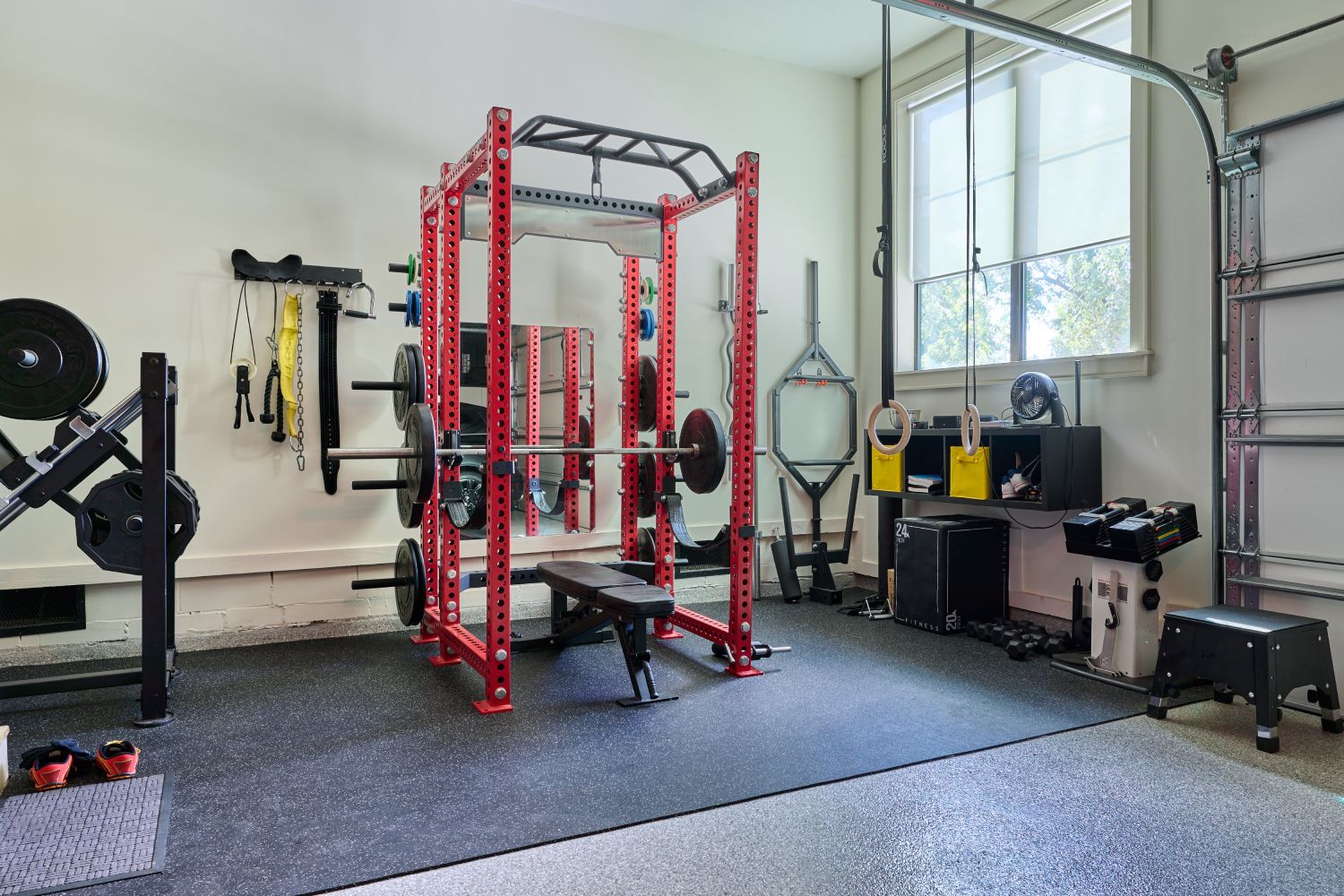
For many fitness enthusiasts, the garage is the perfect place to build a dedicated training space. It offers more room than a spare bedroom, allows for larger equipment, and creates an environment that separates workouts from everyday life. However, simply moving a few weights into the garage does not automatically create an effective gym. Careful planning is essential if the space is expected to remain functional, comfortable, and motivating over the long term.
The first step is determining how the space will be used. Some people focus exclusively on strength training, while others combine weightlifting with functional fitness, mobility work, or conditioning exercises. Understanding your training priorities makes it much easier to choose equipment that delivers the greatest value instead of filling the room with machines that rarely get used.
Flooring is one of the most important investments in any garage gym. Concrete floors are durable, but they are not ideal for lifting weights directly. High-quality rubber flooring protects both the equipment and the floor while reducing noise and providing better grip during heavy exercises. It also creates a more comfortable environment for bodyweight movements and stretching.
Equipment placement should be planned before any purchases are made. Larger items such as power racks or benches should be positioned first, leaving enough room for safe movement around them. Barbell exercises require additional clearance on each side, while dumbbell areas should allow users to move freely without obstacles. A well-organized layout improves both safety and workout efficiency.
Storage is another factor that many beginners underestimate. Weight plates, barbells, resistance bands, kettlebells, and accessories can quickly create clutter if they do not have designated storage locations. Vertical plate trees, wall-mounted holders, shelving units, and dumbbell racks help keep the training area organized while reducing trip hazards.
Ventilation becomes especially important in garages because temperatures can fluctuate significantly throughout the year. Installing fans, improving airflow, or adding insulation can make workouts far more comfortable during both summer and winter. Proper lighting also contributes to a better training experience by improving visibility and creating a more motivating atmosphere.
Another smart strategy is purchasing equipment that supports multiple exercises. Instead of buying several machines that target individual muscle groups, many experienced lifters prioritize versatile equipment such as power racks, adjustable benches, barbells, and dumbbells. This approach saves space while allowing hundreds of different exercise variations.
Planning for future progress is equally important. As strength increases and training goals evolve, additional equipment may be required. Leaving enough space for future upgrades prevents expensive rearrangements later and allows the gym to grow naturally over time.
Budget management also deserves attention. Building a complete garage gym does not need to happen all at once. Many successful home gym owners purchase equipment gradually, starting with the essentials before expanding their setup. This approach allows for better purchasing decisions and reduces the likelihood of buying equipment that eventually goes unused.
Maintenance should not be ignored. Cleaning equipment regularly, checking bolts and fasteners, inspecting cables or attachments, and protecting metal surfaces from moisture all help extend the lifespan of fitness equipment. Small maintenance tasks performed consistently can prevent larger problems in the future.
Anyone planning to build or upgrade a garage gym can explore GearForFit for equipment that supports strength training, functional fitness, and complete home gym solutions designed for Canadian homeowners.
A thoughtfully designed garage gym is much more than a collection of equipment. It becomes a personal training environment that encourages consistency, removes barriers to exercise, and supports long-term fitness goals. With careful planning and quality equipment, even a modest garage can become an efficient and enjoyable place to train throughout the year.
