
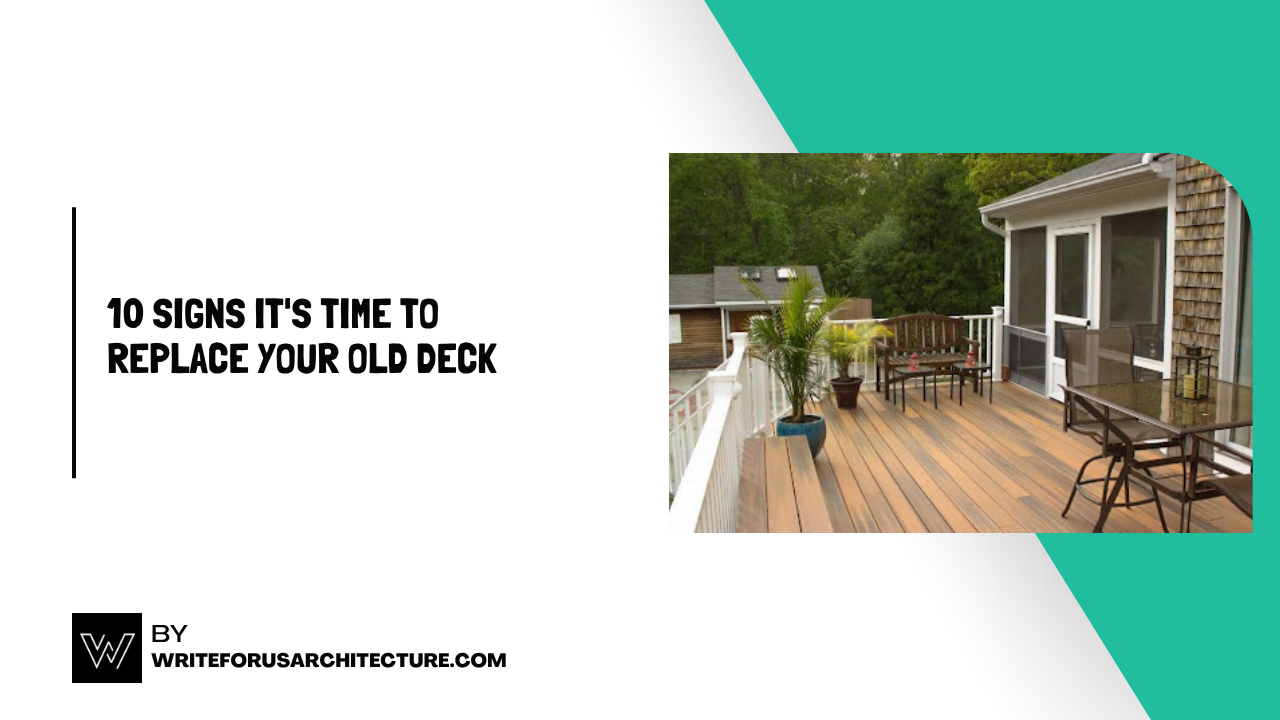
Your deck has hosted countless summer barbecues, lazy Sunday mornings, and family gatherings. But like everything exposed to the elements year after year, it won’t last forever. Knowing when to repair versus when to replace can save you money, prevent injury, and protect your home’s value. Here are ten telltale signs that your old deck has reached the end of its lifespan.
1. Widespread Wood Rot
What to Look For
Press a screwdriver into various boards across your deck. If it sinks in easily or the wood crumbles, rot has set in. Soft, spongy, or discolored wood is a clear indicator of decay caused by prolonged moisture exposure.
Isolated rot on one or two boards can often be repaired. But when rot is widespread, especially in the structural posts, beams, or joists replacement is the safer and more cost-effective choice.
2. Significant Structural Damage
Why It Matters
The ledger board (which connects your deck to your house), support posts, and beams form the skeleton of your deck. If any of these show signs of damage such as cracking, splitting, warping, or rot, the entire structure may be compromised.
A structurally unsound deck is a serious safety hazard. If your inspector finds problems at the foundational level, it’s almost always more practical to start fresh than to attempt piecemeal repairs.
3. Persistent Wobbling or Swaying
When you walk across your deck, it should feel solid and stable. If it sways, bounces, or wobbles underfoot, the issue likely goes beyond surface-level boards. This kind of movement often signals failing connections, deteriorating posts, or improper footings, all of which point toward full replacement.
4. Popping, Loose, or Missing Fasteners
Nails and screws can back out over time as wood expands and contracts through seasonal changes. A few loose fasteners are a normal maintenance issue. However, if you’re constantly finding popped nails, missing screws, or boards that shift when stepped on, the wood beneath may no longer be holding fasteners securely. A sure sign that the material itself has degraded beyond repair.
5. Severe Cracking, Splintering, or Warping
Surface Problems That Run Deeper
Minor cracks and splinters can be sanded down or sealed. But when boards are deeply cracked lengthwise, heavily splintered across large areas, or warped so severely that they’ve pulled away from joists, the damage is more than cosmetic.
Warped or cupped boards trap water underneath, accelerating rot and creating uneven surfaces that are both unsightly and dangerous. At this stage, replacing the deck is far more practical than replacing board after board indefinitely.
6. Faded, Peeling, or Flaking Finish That Won’t Hold
A well-maintained deck holds a stain, seal, or paint finish reasonably well. If you find yourself refinishing the deck every season and the finish continues to peel, bubble, or flake shortly after application, the wood’s surface integrity may be gone.
This is especially common with older pressure-treated lumber or wood that has been subjected to years of UV exposure and moisture cycling. At that point, no amount of refinishing will restore a quality appearance or adequate protection.
7. Mold, Mildew, or Algae Growth
A Health and Safety Concern
Surface mold and mildew can often be cleaned with appropriate deck cleaners. But when growth returns quickly, penetrates deeply into the wood grain, or covers large portions of the deck, it signals chronic moisture retention that cleaning alone can’t solve.
Beyond aesthetics, mold and algae make deck surfaces slippery and hazardous, and persistent moisture is the leading driver of structural rot over time.
8. Outdated Design or Code Compliance Issues
Building codes evolve, and a deck built 20 or 30 years ago may not meet current safety standards. Common issues include railings that are too low, balusters spaced too far apart, inadequate stair construction, or footings that don’t comply with modern frost-depth requirements.
If your deck fails an inspection or doesn’t meet local codes, replacement gives you the opportunity to build a structure that is both safe and compliant. Assuring you that it will pass inspection if you decide to sell your home.
9. The Cost of Repairs Approaches the Cost of Replacement
When the Math Doesn’t Add Up
Before committing to extensive repairs, get quotes for both repair and replacement. A common rule of thumb: if repair costs exceed 50% of the replacement cost, it makes more financial sense to replace the entire deck.
A new deck also comes with a fresh warranty, modern materials (including low-maintenance composites), and improved aesthetics. All of which add more long-term value than patching an aging structure.
10. The Deck Is More Than 15–20 Years Old
Age alone doesn’t automatically mean replacement, but it’s an important factor. Most wood decks, even well-maintained ones, have a lifespan of 15 to 25 years depending on the species of wood, climate, and upkeep. Composite decking can last longer, but it’s not immune to wear either.
If your deck is approaching or has passed the two-decade mark, it’s worth having a professional inspection to assess its remaining life. Especially before investing more money in repairs.
Making the Decision: Repair or Replace?
When in doubt, consulting with a licensed contractor or a custom deck builder in Pennington, NJ is a great way to get a professional assessment. They can assess the structural integrity of your deck and provide an honest recommendation. As a general rule:
- Repair if damage is isolated, the structure is sound, and the cost is well below replacement.
- Replace if damage is widespread, the structure is compromised, the deck is aging, or repair costs are climbing toward replacement territory.
A new deck isn’t just a safety upgrade, it’s an investment in your home’s curb appeal, functionality, and resale value. Knowing when to let go of an old deck is the first step toward enjoying an outdoor space that’s truly built to last.
Sivasankari

I’m Sivasankari, a writer with a deep appreciation for architecture and design. With a background in marketing and merchandising, I explore how aesthetics, functionality, and innovation shape our built environment.