
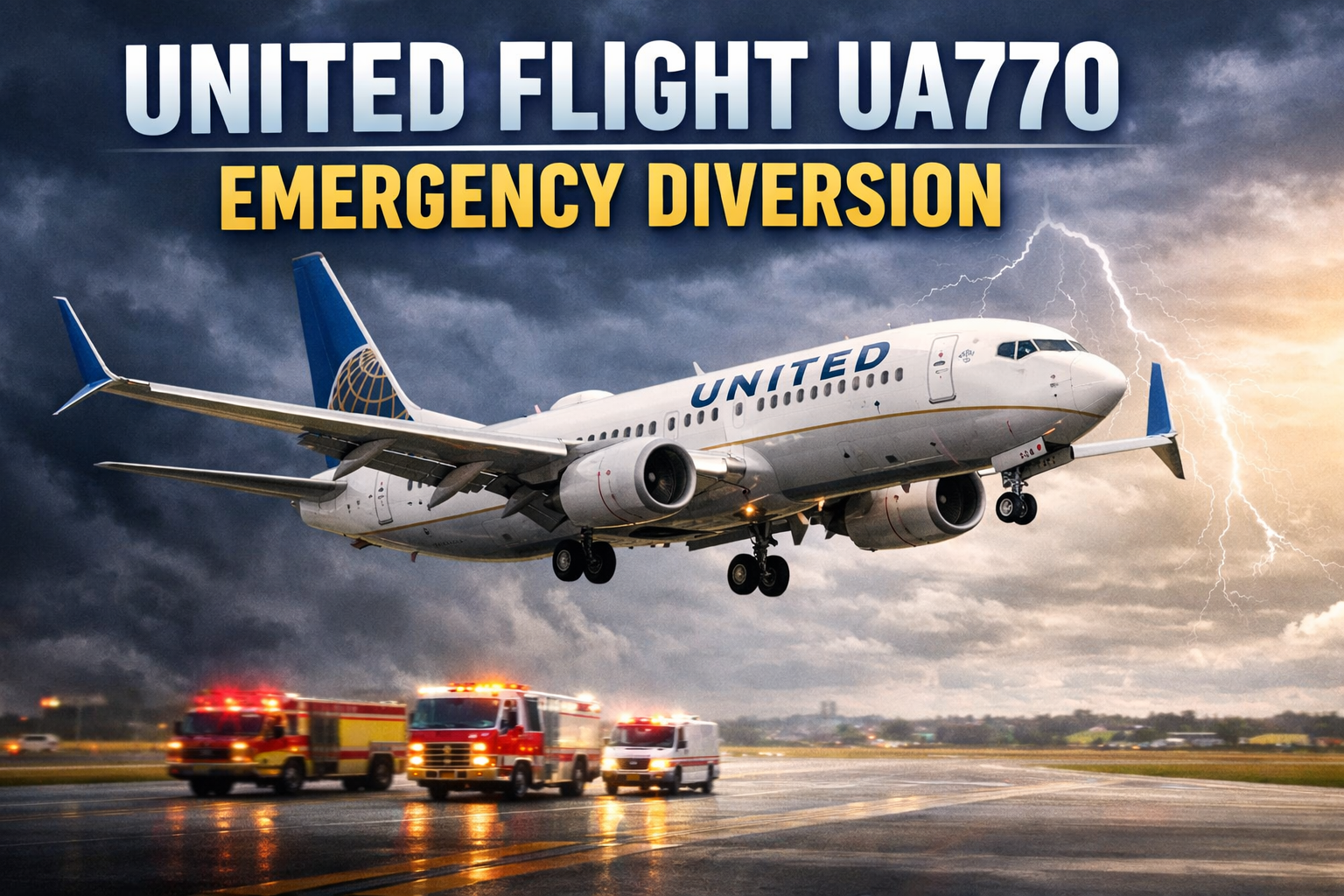
I still remember the moment I first heard about United Airlines Flight UA770 making an emergency diversion—it immediately caught my attention. As someone who follows aviation stories closely, I couldn’t help but dig deeper into what really happened, how such situations are handled, and what it means for passengers onboard.
What Happened on United Airlines Flight UA770 Emergency Diversion?
From what I gathered, the flight, operated by United Airlines, was cruising normally when an unexpected issue forced the crew to take immediate action. Emergency diversions are never taken lightly. Pilots are trained to evaluate situations in seconds, and when they decide to divert, it’s always about safety first.
In this case, the aircraft had to change its route and land at an alternate airport instead of its original destination. While exact details can vary—ranging from medical emergencies to technical concerns—the core principle remains the same: protect everyone onboard.
What Is an Emergency Diversion in Aviation?
Before this, I always thought diversions were rare—and they are—but they’re also a standard part of aviation safety.
An emergency diversion happens when:
- A passenger experiences a medical emergency
- There is a technical issue with the aircraft
- Weather conditions become unsafe
- Security concerns arise
Airlines like United Airlines follow strict protocols set by authorities such as the Federal Aviation Administration to ensure these situations are handled smoothly.
Inside the Cabin: What Passengers Likely Experienced
I often try to imagine what it must feel like sitting on a plane during such a moment. Most passengers probably didn’t even realize the seriousness at first.
Typically, here’s how it unfolds:
- The captain makes a calm announcement
- Cabin crew prepare passengers for landing
- Emergency services are alerted on the ground
Even in stressful situations, airline staff are trained to maintain composure, which helps reduce panic onboard.
Possible Reasons Behind UA770’s Diversion
While I don’t want to speculate too much, there are a few common triggers that might explain why United Airlines Flight UA770 had to divert:
1. Medical Emergency
One of the most common reasons. If a passenger’s life is at risk, pilots will land at the nearest suitable airport.
2. Technical Concern
Even minor technical warnings can lead to diversions. Aviation prioritizes caution over risk.
3. Weather Conditions
Sudden turbulence, storms, or visibility issues can force route changes.
4. Security Issues
Though rare, any perceived threat is taken seriously.
How Airlines Handle Such Situations
What impressed me the most while learning about this incident is how structured the entire process is. Airlines don’t improvise—they follow well-defined systems.
Here’s what usually happens:
- Pilots coordinate with air traffic control
- A suitable airport is selected based on distance and facilities
- Ground emergency teams are prepared before landing
- Passengers receive assistance after landing
Organizations like the International Air Transport Association help standardize these procedures globally.
Was Anyone in Danger?
From everything I’ve seen and understood about situations like the United Airlines Flight UA770 diversion, the answer is usually reassuring.
Emergency diversions are preventive, not reactive disasters. The goal is to avoid danger before it escalates. In most cases:
- The aircraft lands safely
- Passengers are unharmed
- The issue is resolved on the ground
That’s what makes modern aviation one of the safest modes of travel.
What Happens After the Landing?
I used to think the story ends once the plane lands—but that’s just the beginning of another process.
After landing:
- Medical teams assist if needed
- Aircraft undergoes inspection
- Passengers are rebooked or accommodated
- Airlines issue official statements
Depending on the situation, passengers might continue their journey on another aircraft.
My Final Thoughts
Looking into the United Airlines Flight UA770 emergency diversion gave me a deeper appreciation for aviation safety systems. What might seem like a scary situation is actually a sign that everything is working exactly as it should.
If anything, stories like this remind me that behind every flight is a team of highly trained professionals making real-time decisions to keep passengers safe.
And honestly, that’s something I find incredibly reassuring every time I board a plane.
Also Read:
