
Three months ago, a furniture designer in Austin spent six hours adjusting one camera angle. Moved it 2.3 degrees. Everyone signed off. Cost was $1,200 for those two point three degrees, because the alternative – physical prototype, photographer, studio time – would’ve been $8,500 and taken two weeks. That’s the calculation happening in design studios right now.
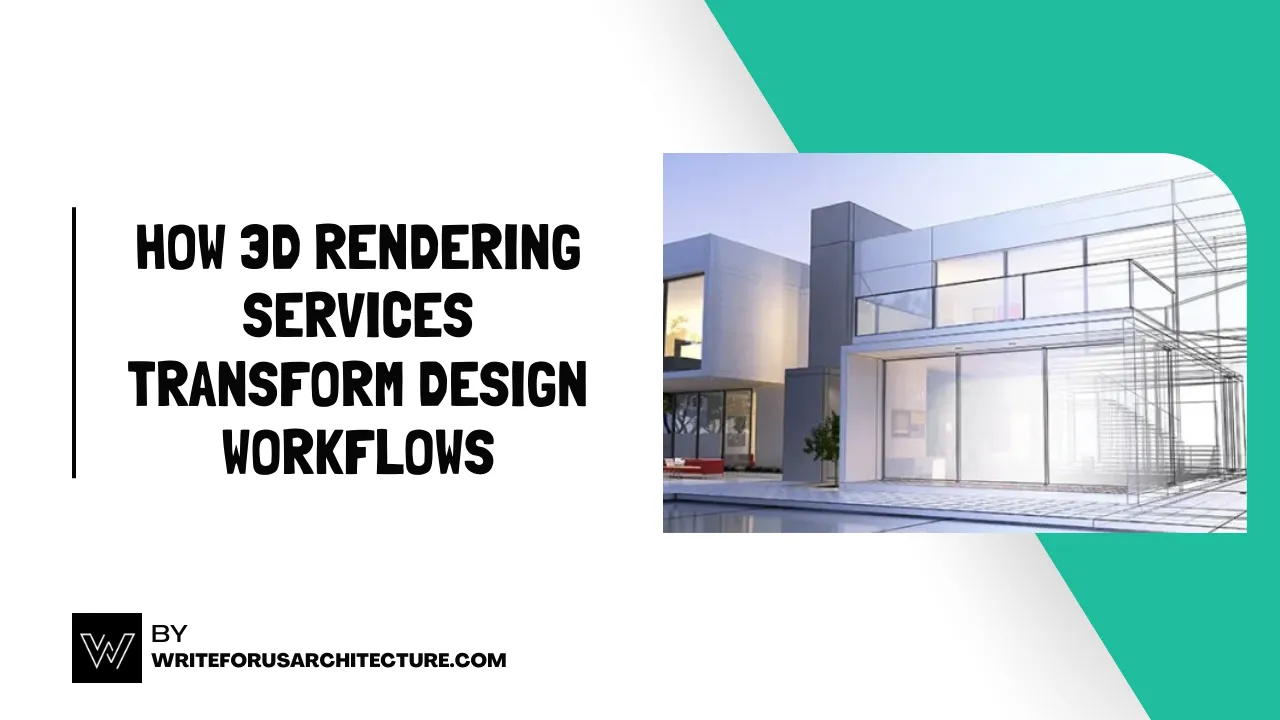
3D rendering services handle everything from architectural visualization to product mockups, replacing workflows that used to require physical materials. Studios send CAD files, get back photorealistic images. No prototype fabrication, no location scouting, no weather delays.
What rendering actually delivers
You’re getting images that look like photographs but exist only as data. Architectural renders show buildings before foundation is poured. Product visualization shows furniture before the first cut. Real estate developers use exterior rendering to presell units – McKinsey found 61% of homebuyers in 2023 made purchase decisions based on renderings alone, never visiting the physical site.
The technical side: ray tracing calculates how light bounces. Subsurface scattering makes light penetrate surfaces, bounce inside materials, exit somewhere else. You see it in wax, jade, skin. Global illumination accounts for indirect light – the red wall casting pink onto the white ceiling. These aren’t filters. They’re physics simulations running on GPU clusters.
Photorealistic rendering reduced our client revision cycles from 12 rounds to 3. Material selections that used to take six weeks now happen in eight days, because stakeholders see exactly what they’re approving.
Interior rendering shows spaces with furniture arrangements, lighting schemes, material finishes. Change the flooring from oak to marble in 40 minutes instead of ordering samples and waiting three weeks. 3D visualization services include animation – walkthroughs showing how light moves through spaces at different times of day.
Commercial rendering for retail chains: one master scene, swap out regional branding, generate 47 location variants in two days. Traditional photography would need crews in 47 cities.
Why companies switch from photography
Cost gets mentioned first, but that’s not why companies switch. It’s timelines.
Product photography needs the physical item. If it’s a chair, you need the chair. Manufacturer makes it, ships it, photographer schedules studio time. Maybe gets 20 shots if they’re having a good day. Client wants the chair in blue now? Make another chair, ship it, reschedule.
3D product rendering: change color in the material shader. Fifteen minutes. Want it in 14 colors for the catalog? Forty minutes for all variants. A rendering company delivered 340 product images in one week for a furniture launch – their previous photographer needed four months for 180 shots.
Here’s the thing – rendering quality improved faster than anyone expected. The National Association of Home Builders reported in 2024 that 73% of buyers couldn’t distinguish professional architectural renders from photographs in blind tests. Five years ago that number was 31%.
Architectural rendering services particularly changed residential development. Project in Denver: developer commissioned exterior and interior visualization for a 22-unit building. Presold 18 units before breaking ground. Construction started with $4.1 million already committed, all from people who’d only seen renderings.
We replaced our $6,800 monthly photography retainer with rendering at $2,200 monthly. But the actual savings came from compressed timelines – products reaching market 11 weeks faster on average.
CGI rendering handles impossible shots. Camera angles that would require demolishing walls. Lighting conditions that don’t exist – sunset light at 2pm for the shoot. Furniture floating in space for that hero image. Physics optional.
Technical considerations and workflow integration
Studios working with rendering services need to understand file requirements. Most renderers want native CAD formats – Rhino, Revit, SketchUp, SolidWorks. Some accept STEP or IGES if that’s all you have. The more detailed your source files, the less back-and-forth on modeling.
Typical workflow: you send drawings and reference images, renderer builds the 3D model, you review wireframes, they add materials and lighting, you get draft renders. Revision rounds happen here. Final delivery includes high-resolution images – usually 300 DPI for print, 4K or higher for digital.
Quality rendering services provide different output types:
- Still images for marketing and presentations – standard deliverable, usually 24-72 hour turnaround depending on complexity
- Animation and walkthroughs – showing movement through spaces, typically 1-2 weeks for 60-90 second clips
- Interactive 360-degree views – viewers control camera angle, useful for product pages and virtual showrooms
- VR-ready environments – full spatial models for virtual reality headsets, mainly architectural applications
Turnaround varies wildly. Simple product shot with existing model? Two days. Complex architectural exterior with landscaping, vehicles, people? Two weeks. Rush projects cost 40-60% more but compress timeline to 3-5 days.
Studio in Brooklyn does product launches for home goods brands. They maintain a library of 200+ pre-built room environments. Client sends new product model, designer drops it into relevant rooms, adjusts lighting, renders. Client has 15 lifestyle images by end of week. Photographer would need location rental, props, styling, crew – three weeks minimum and probably $15,000.
Realistic rendering depends on material accuracy. You can’t just say “wood” – renderer needs species, finish, age, wear patterns. Same with fabrics: weave type, thread count affects how light interacts. Good rendering studios ask annoying questions about these details because details separate photorealistic from obviously fake.
Material libraries evolved to where we stock 8,000+ scanned surfaces. Client says ‘aged copper’ and we show them 23 variations with different patina patterns. Ten years ago we had maybe 400 materials total.
Professional 3D rendering integrates with existing design software. Architects export from Revit, renderers import directly, maintain scale and spatial relationships. Product designers send SolidWorks assemblies with all hardware and mechanisms intact. The model becomes the source of truth – change it once, rendering updates automatically.
Pricing structures vary. Per-image rates run $200-2,500 depending on complexity. Monthly retainers for ongoing work usually offer better rates. Project-based pricing for large campaigns. Some studios charge hourly for revisions beyond included rounds – $120-250/hour typical for experienced renderers.
Market’s consolidating around specialized providers. Architectural firms increasingly use dedicated rendering studios instead of in-house visualization teams. Makes sense when project volume fluctuates – why maintain full-time staff and render farm for sporadic needs?
