
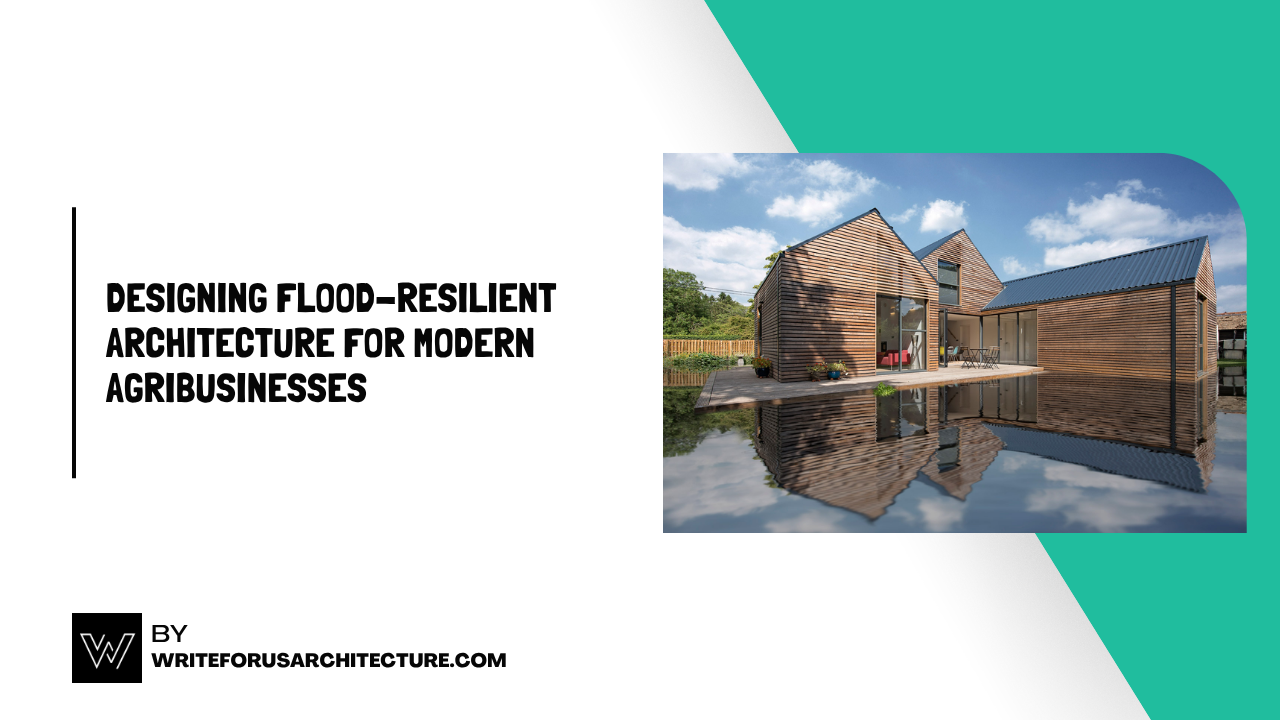
Australian agribusinesses face an increasingly unpredictable climate. Record-breaking rainfall and sudden inundations pose a severe threat to commercial farming operations, often targeting vulnerable packing sheds, machinery depots, and bulk storage facilities. Historically, rural structures were built for basic shelter rather than extreme weather resistance, leaving modern operations at a significant disadvantage. For modern agricultural enterprises, relying solely on reactive measures is no longer a viable business strategy. Instead, architects and site planners are rethinking how rural commercial facilities are built and retrofitted. By focusing on flood-resilient architecture, property owners can protect vital infrastructure, minimise downtime, and ensure long-term operational continuity.
The Economic Imperative of Resilient Farm Infrastructure
The financial impact of extreme weather on rural areas extends far beyond immediate structural damage. When agricultural facilities are compromised by floodwaters, entire local economies and national supply chains suffer. Lost inventory, damaged processing equipment, and prolonged operational delays can cripple a business for months. Spoilage of perishable goods due to power outages or inaccessible transport routes adds another layer of financial devastation for rural communities.
Recognising this escalating threat, recent government-backed initiatives highlight the critical need for robust farm infrastructure. According to a 2026 announcement from AgriFutures Australia, a national assessment is currently taking a system-wide view of vulnerabilities across agricultural inputs, supply chains, and logistics networks. The primary goal is to establish practical resilience measures focused on keeping farms operating through disruptions and volatility. For agribusiness owners, investing in smart architectural design is a direct investment in business survival and national food security.
Site Planning and Ground-Level Water Management
Effective flood resilience begins long before the first brick is laid. Landscape architecture and strategic site grading work hand in hand to manage heavy water runoff safely away from primary commercial structures. Designing natural swales, retention basins, and permeable surfaces can significantly reduce the volume of water pooling around essential buildings. Civil engineers and architects must evaluate the natural topography and soil composition to create a comprehensive drainage strategy tailored to the specific property. By pairing these earthworks with affordable water barriers, property owners can establish an immediate line of defence against sudden inundations.
However, unpredictable storm surges often require this type of targeted reinforcement. Property managers can strategically deploy these modular solutions to protect highly sensitive areas like machinery sheds and feed storage. Integrating practical, removable defences into the broader site plan allows businesses to safeguard their most valuable assets quickly without overcapitalising on permanent concrete walls. This hybrid approach of permanent grading and modular protection creates a highly adaptable agricultural site. By relying on cost-effective deployable systems, farmers can redirect their capital toward essential crop production rather than massive civil engineering projects.
Structural Upgrades for Comprehensive Weatherproofing
While intelligent landscaping and modular barriers handle ground-level water, the physical buildings must also be engineered to endure severe conditions. Modern commercial agriculture demands structures that are robust enough to face heavy storms from every angle. Site topography manages the lower threats, but utilising durable exterior materials ensures the facility is protected from the top down. For example, upgrading to weather-resistant metal roofing provides a low-maintenance solution capable of withstanding extreme rain, hail, and high winds, keeping the interior processing zones completely dry. These modern resilient systems also offer improved thermal efficiency, which is an added bonus for temperature-controlled agricultural facilities.
Beyond the roof, a comprehensive approach to weatherproofing an agribusiness facility involves several key architectural modifications designed to resist both hydrostatic pressure and high wind shear:
- Elevated Foundations: Raising the primary floor level of critical storage and processing facilities above historical flood lines to prevent water ingress during peak storm events.
- Wet Floodproofing: Using moisture-resistant building materials in lower levels, such as marine-grade plywood or treated masonry, which allow floodwaters to enter and exit without causing major structural decay.
- Reinforced Openings: Installing heavy-duty, watertight doors and impact-resistant windows to prevent debris and water intrusion during severe storms.
- Strategic Equipment Placement: Designing interior layouts so that vital electrical panels, HVAC systems, and expensive processing machinery are permanently housed on upper levels or elevated platforms.
By embracing these structural upgrades, rural businesses can significantly reduce their risk profile when the next major storm hits, preventing total losses and speeding up recovery times.
Securing the Future of Agricultural Enterprises
The intersection of agriculture and architecture has never been more important. As climate patterns continue to test the limits of traditional farming infrastructure, the adoption of resilient building practices is absolutely essential for survival. By combining strategic landscape grading, targeted protective equipment, and robust structural retrofitting, modern agribusinesses can comfortably weather the storm. Ultimately, these proactive design choices protect profit margins, secure vital supply chains, and ensure that Australian farming operations remain strong and operational for generations to come.