
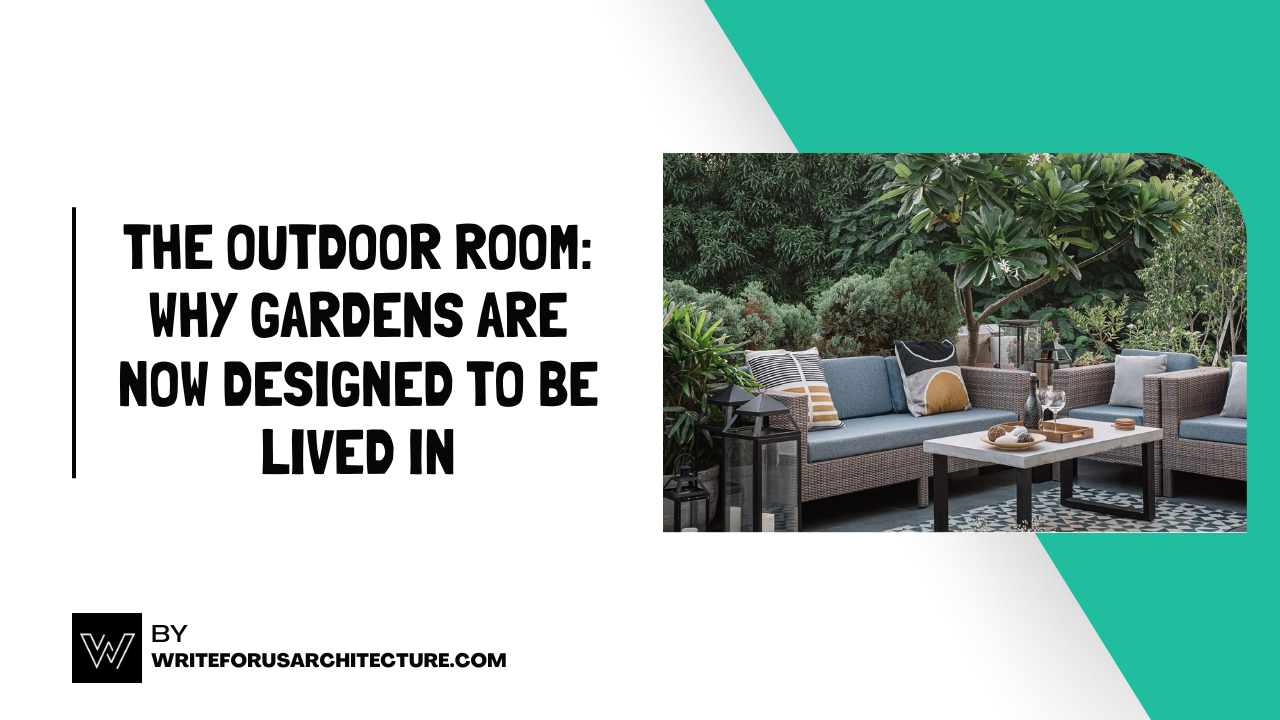
There was a time when gardens were something you looked at from the house. They framed windows, provided colour beyond the glass and marked the edge between indoors and out. Today, that boundary feels far less defined. Gardens are no longer simply viewed. They are entered, occupied and lived in.
“People often think a garden is something you finish,” according to Umber Garden Design. “I see it more like a room you grow into, one that changes with you and quietly makes space for whatever life looks like now.”
This shift is not about outdoor furniture or entertaining trends. It reflects a deeper change in how we relate to space, time and home. As daily life becomes increasingly compressed indoors, the garden has taken on a quieter, more essential role. It has become another room, not in function alone, but in feeling.
When outside becomes part of home
An outdoor room does not mimic the interior. It does not rely on walls, ceilings or fixed boundaries. Instead, it borrows the sense of comfort and belonging we associate with home and expresses it through openness, light and movement.
Designing gardens in this way begins with asking how the space will be used when no one is performing. Where do you sit when you are tired rather than hosting. Where does the eye rest when the day slows. Where does shelter matter, not from rain alone, but from noise and distraction.
These questions shift the focus away from appearance and towards experience. The garden becomes somewhere to inhabit rather than maintain.
Designing for presence, not perfection
An outdoor room works because it feels welcoming. It does not demand attention or effort. It supports presence. This is achieved through proportion, enclosure and rhythm rather than ornament.
Low walls, planting that wraps rather than divides, subtle changes in level and carefully framed views all contribute to a sense of containment without confinement. These elements give the garden weight and intimacy, allowing it to hold people rather than simply accommodate them.
There is often less on display than expected. Open space becomes as important as planted areas. Materials are chosen for how they age rather than how they appear on installation day. This restraint allows the garden to settle into itself, becoming more comfortable over time.
Rooms without walls
The idea of rooms outdoors is not new, but it has evolved. Rather than rigid zones with clear labels, modern garden rooms are softer and more fluid. One space leads naturally into another. Use is suggested rather than prescribed.
A dining area may also be a place to read. A path becomes somewhere to pause. A seat may face different directions depending on light and season. This flexibility reflects how people actually live.
By avoiding overly fixed layouts, the garden remains responsive. It adapts to mood, weather and time of day, much like the rooms inside a home.
Shelter as a feeling
Shelter in an outdoor room is as much emotional as it is physical. It is created through planting, orientation and enclosure rather than roofing alone.
Trees and hedges soften sound. Planting absorbs movement. A sense of being held within the landscape encourages stillness. These qualities are especially important in gardens connected closely to the home, where the transition between inside and outside needs to feel natural rather than abrupt.
When done well, stepping into the garden feels like stepping into another part of the house, one that simply happens to be open to the sky.
Living with the seasons
An outdoor room is not static. It changes daily and seasonally, and this change is part of its value. Designing with this in mind allows the garden to remain usable and meaningful throughout the year.
Structure carries the space when planting recedes. Light becomes a design element in its own right. Views shift as growth and decay take place. Rather than resisting these changes, the garden accommodates them.
This seasonal dialogue deepens the relationship between people and place. The garden becomes something you live with rather than manage.
The garden as retreat, not escape
Outdoor rooms are often described as escapes, but the best ones do not remove you from daily life. They soften it. They offer a place to step into without stepping away.
Because they are connected to the house, these spaces are used more often and more naturally. A few minutes outside becomes part of the day rather than a planned activity. This regular use is what gives the garden its sense of belonging.
Over time, the outdoor room becomes familiar in the same way as any interior space. It holds routine, memory and quiet moments without asking for attention.
Why this matters now
As homes are asked to do more, the garden has become an essential extension rather than a luxury. It offers space without enclosure, calm without isolation and presence without pressure.
Designing gardens as outdoor rooms acknowledges this shift. It recognises that gardens are not separate from daily life, but deeply woven into it.
When a garden is designed to be lived in, it becomes more than a setting. It becomes a place of return. A room without walls, shaped by light, weather and time, quietly supporting life as it unfolds.
